








Product Information

What is a Spark Plug & What Does it do?

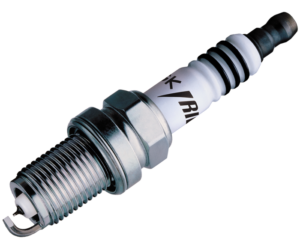
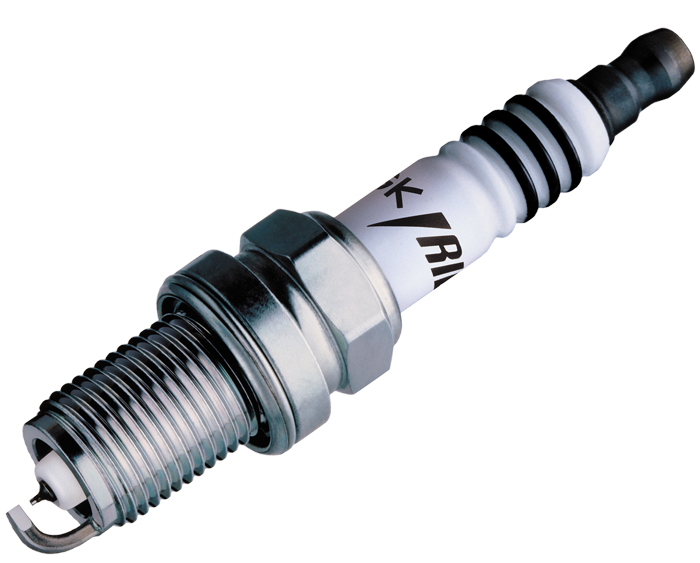
CombustionAn internal combustion engine requires three key ingredients to operate: air, fuel and spark. A spark plug is a critical engine component that provides the spark that ignites the air-fuel mixture that drives an engine.

A spark plug operates by directing electrical current to flow through a centre electrode, forming a spark across an electrode (or air) gap, completing the circuit to a ground electrode. The centre electrode is surrounded by a ceramic insulator which is non-conductive preventing current leakage and ensuring electricity flows in the desired direction.


Spark Plug Anatomy

Although the spark plug is a familiar engine component, spark plug terminology often varies. The diagram below identifies the major components of a spark plug and their correct terminology.

Spark Plug Anatomy

Spark Plug Types

The following table gives an example of the characteristics and service life of resistor spark plugs when used in a modern unleaded engine:

Type*

Centre Electrode

Ground Electrode

Service Life **

Benefits

Click Image to Enlarge

Nickel Alloy 

Nickel

Nickel

20,000 - 40,000 kms

Standard style Spark Plug

Click to enlarge

Nickel Alloy 
(V-Groove)

Nickel

Nickel

20,000 - 40,000 kms

Improved ignitability due to sparking at periphery of the electrode

Click to enlarge

Iridium IX

Iridium tip

Nickel

60,000 kms

Long service life and even better ignitability due to a small diameter centre electrode

Click to enlarge

Laser Platinum

Platinum tip

Platinum pad/chip

100,000 kms

Extremely long service life. High ignitability due to fine tipped centre electrode

Click to enlarge

Laser Iridium 

Iridium tip

Platinum pad/chip

100,000 kms

Extremely long service life. Improved high ignitability due to fine tipped centre electrode

Click to enlarge

NEW!
DFE Iridium
(Double Fine Electrode)

Iridium tip

Iridium tip

100,000 kms

Superior ignitability due to fine tip centre and ground electrodes. Excellent service life.

Click to enlarge

*NGK Spark Plugs are designed to OEM requirements and as such, a variant of each of the above styles may not be available as it may not be an OEM requirement.
**Please note that the service life is provided as a general guide and may vary due to vehicle driving conditions.


What is a Surface Discharge Spark Plug?

A surface discharge spark plug is designed to create a spark along the insulator nose at the firing end. This type of spark plug can be further classified into the semi-surface discharge type, supplementary gap type and intermittent discharge type.

Features:

Semi-surface discharge type

The wide gap of semi-surface discharge type improves ignition capability and is less sensitive to voltage requirement increases due to gap growth. Semi-surface discharge plugs burn away the carbon on the insulator nose to suppress a decline of insulator resistance.

 Supplementary gap type

Spark discharge at the supplementary gap burns away the carbon on the insulator to suppress a decline of insulation resistance. The small clearance between the insulator supplementary gap prevents the carbon-included combustion gasses from entering the gas volume. This reduces the carbon accumulation on the insulator.

Intermittent discharge type

Spark discharge at intermittent gaps burn away the carbon on the insulator to suppress a decline of insulation resistance.


Part Numbering System

Racing Spark Plugs

R 0 0 0 1 -10
R = Racing Serial Number Heat Range

top of page